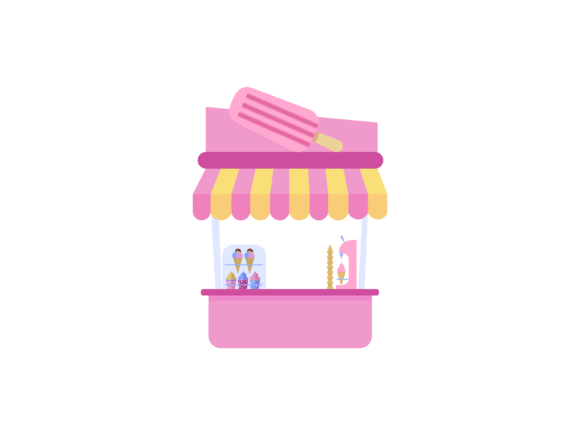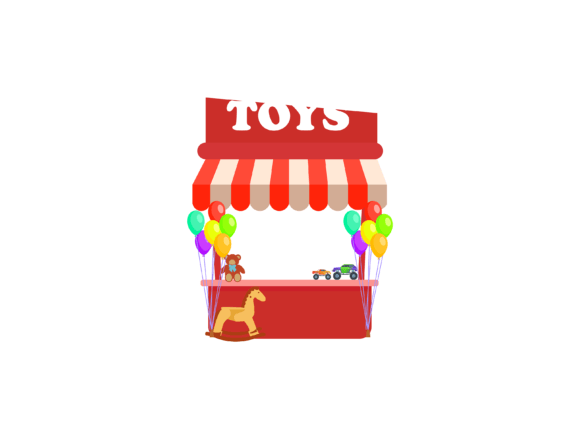
Isometric Toys Store Illustrations: Your Ultimate Design Asset
More Than Just Art: A Complete Visual System
When you first encounter the Isometric Toys Store Illustrations collection, it’s easy to see the charming, three-dimensional toys. But looking closer, you realize it’s a complete design system. This isn’t a scattered set of drawings; it’s a cohesive visual language built around a playful, retro toy shop aesthetic. The isometric perspective gives everything a structured, architectural feel, while the subject matter—colorful blocks, stuffed animals, board games, and whimsical storefronts—injects pure nostalgia and joy. It’s a style that feels both meticulously crafted and warmly inviting, a combination that’s surprisingly versatile.
The personality of this illustration set walks a fine line between sophistication and childhood wonder. It appeals to adults who appreciate good design, while immediately resonating with a child’s sense of play. This dual appeal is its superpower. The clean lines and considered composition speak to your inner designer, while the vibrant palette and familiar objects trigger genuine emotional connection. It’s a visual asset that doesn’t just decorate a project; it gives it a distinct character and a story to tell.
Unlocking Real-World Applications
So, where does a collection like this actually work? The applications are broader than you might initially think, spanning both physical products and digital platforms. Let’s break down the possibilities with practical examples.
For the Entrepreneur and Brand Builder
If you’re launching a children’s brand, an educational service, or a boutique gift shop, these illustrations are foundational. They provide instant brand identity for your logo design, packaging design, and product labels. Imagine a phone case or a totebag featuring a single, beautifully rendered toy from the set—it becomes an immediate brand identifier. For a children’s book publisher, the illustrations can set the entire mood for a series, creating a recognizable world on every cover and interior page. The consistency of the isometric style ensures that your brand looks professional and thought-out across every touchpoint, from a website banner to printed paper inserts.
For the Content Creator and Marketer
Social media graphics need to stop the scroll, and this style does that effortlessly. The dimensional quality of Isometric Toys Store Illustrations makes them pop in a feed dominated by flat graphics. Use them as hero images for blog posts about parenting, education, or small business. Create engaging Instagram stories or Pinterest pins that tell a visual story. The included PNG format with a transparent background is a lifesaver here, allowing you to layer these assets seamlessly over photos, solid colors, or other design elements. For marketers, they’re a shortcut to creating professional, on-brand social media graphics without needing to commission custom art for every post.
For the Crafter and Hobbyist
This is where the fun gets personal. The high-resolution JPG and PNG files at 300dpi are print-perfect. Think beyond digital. These illustrations are ideal for creating custom printed paper for scrapbooking, journaling, or planner decoration. You could design a stunning pattern for fabric to sew a child’s blanket or pillow. The vector files (AI and EPS formats) are especially valuable here, as they can be scaled to any size without losing quality—perfect for a large wall poster or a tiny sticker sheet. For a child’s birthday party, you could design unique invitations, thank-you cards, and party banners that all look professionally coordinated.
Making Smart Design Choices
Having a powerful asset is one thing; using it effectively is another. Here’s how to think about integrating Isometric Toys Store Illustrations into your workflow with intention.
Evaluating Fit and Pairing
Not every project calls for this playful style. It’s perfect for anything targeting families, educators, creatives, or the gift market. For corporate finance? Probably not. But for a bakery, a daycare, a toy store, or a creative agency? Absolutely. When it comes to typography, you need a font pairing that complements without competing. The illustrations are detailed, so your text should be clear. A clean, modern sans serif font for body text is a safe, readable bet. For headlines, you could use a friendly, rounded sans serif or even a simple script font for a touch of elegance—just ensure it remains legible. Avoid overly ornate or handwritten fonts that might clash with the structured isometric grid.
Leveraging the Full Package
The download includes four critical file types for a reason. The vector AI and EPS files are your editable masters. Use them in Adobe Illustrator to change colors, isolate elements, or combine illustrations into new scenes. This is where you achieve true customization. The high-resolution JPG is great for direct use in documents or as a background. The PNG with transparency is for layering in any design software, from Canva to Photoshop. Understanding which file to use for which task saves you hours and prevents quality loss.
Considering Your Audience
Always think about who will experience the final product. For a children’s book design, clarity and visual appeal are paramount. The isometric style naturally guides the eye, which can help with visual hierarchy on a page. For a T-shirt design, you need to consider how the illustration will look printed on fabric—ensure the lines are bold enough and the colors will translate well to ink. For a phone case, the composition must work within the constraints of the device’s shape and camera cutout. Testing a mockup before finalizing is always a wise step.
Ultimately, the value of a design asset like Isometric Toys Store Illustrations